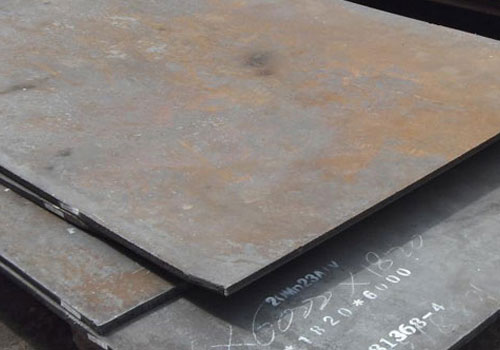
Shipbuilding Steel Grades are Specialized Structural Steels designed for Marine Environments classified by Classification Societies (ABS, DNV, LR) into Normal Strength (A, B, D, E) and High Strength (AH, DH, EH, FH). They offer High Toughness, Good Weldability and Corrosion Resistance with Thicknesses ranging from 3mm to 400mm.
A Ship needs for its Construction various Types of Steels in the form of Hot Rolled Plates, Strips, Different Sections (Including Hollow Sections), Flat Bars, Rods, Bars and Tubular products. The Ship Construction also needs some Specialized Shapes like Unequal Legs and Unequal Thickness Angles
Common Shipbuilding Steel Grades:
Normal Strength (Mild Steel):
GRADE A STEEL
Grade A steel is used for ship structures measuring less than 20 mm, such as bulkheads.
GRADE B STEEL
Grade B steel, a slightly stronger steel, is used for structures measuring 20 to 25 mm.
GRADE D STEEL
Grade D steel is strong enough to resist cracks and is used for structures that measure more than 25 mm thick.
GRADE E STEEL
Grade E steel is heat-treated for the ultimate strength and is used for structures measuring 50 mm or more, making it the ideal material for high-stress parts of the ship, such as the keel.
High Strength (High Tensile Steel):
AH32/36/40: Common for Large Vessel Hulls and Bulk Carriers.
DH32/36/40: Used for ship superstructures and high-stress areas.
EH32/36/40: Suitable for extreme structural loads.
FH32/36/40: Used in cold climate applications Tested down to -60°C.
Key Characteristics and Selection:
Impact Strength: Grades A-F indicate increasing impact toughness (0°C, -20°C, -40°C, -60°C).
Thickness: Mild steel (A) is often used for plating <20 mm, while higher grades (D/E) are used for thicker, highly stressed sections.
Yield Strength: High-Strength Steels (32, 36, 40) provide Stronger, Lighter Construction, increasing from 315 N/mm² to 390 N/mm².
Certifications: Commonly certified by societies like ABS, CCS, DNV-GL, and LR.